Author Interview for “A Graveyard For Gods” Irish Horror Anthology, curated by Lydia E. Penrose
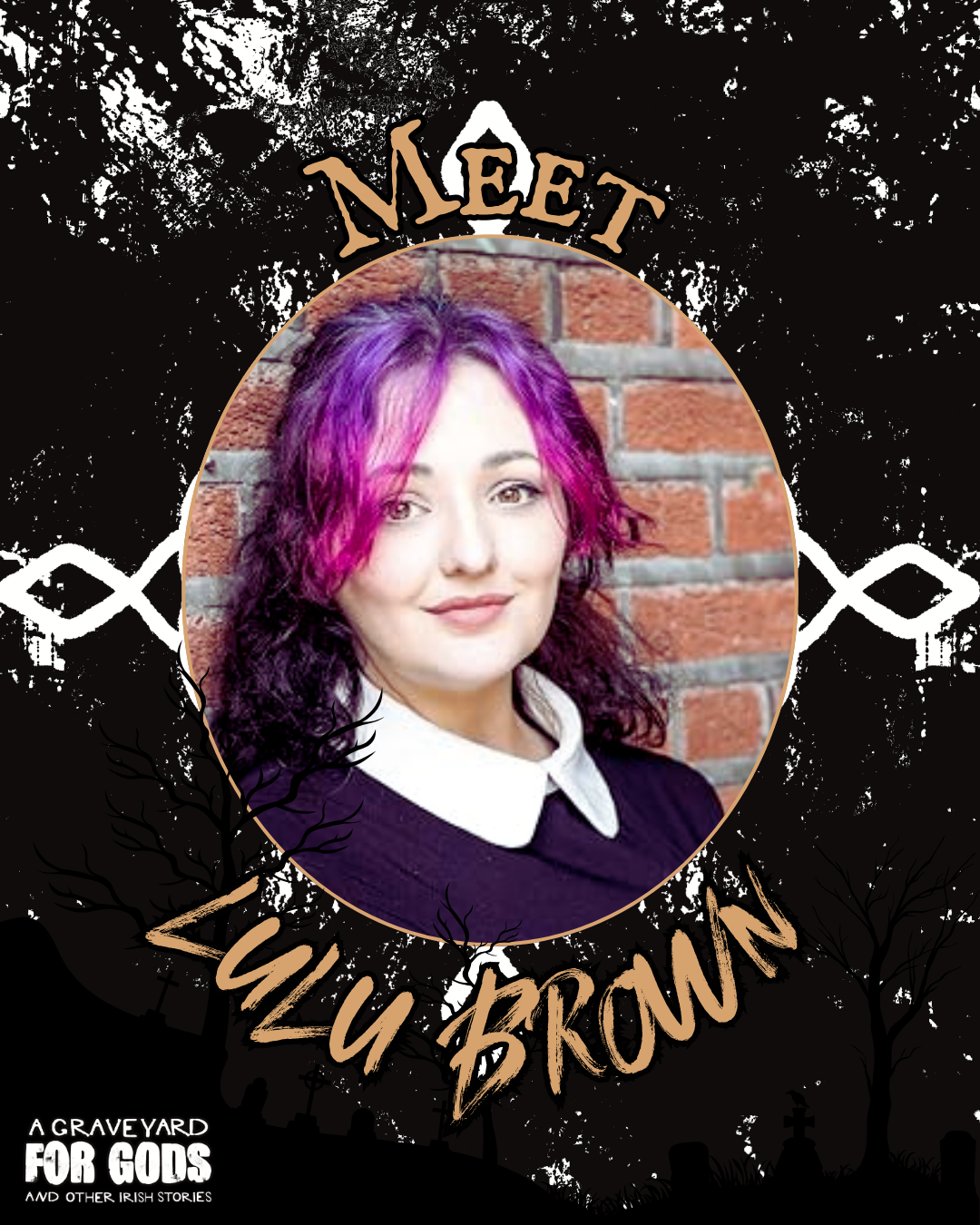
Q1: First tell us about yourself and your writing
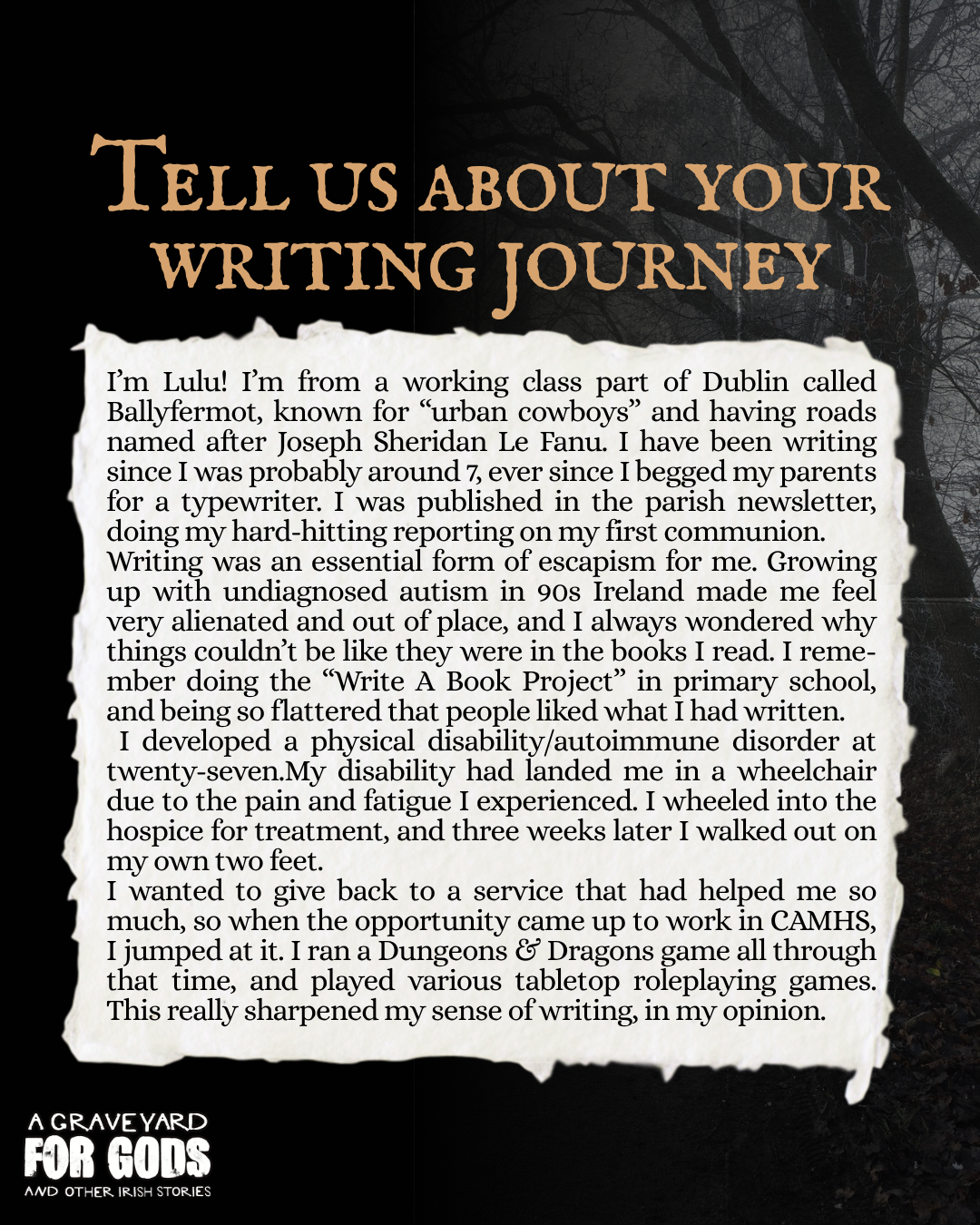
Answer: I’m Lulu! I’m from a working class part of Dublin called Ballyfermot, known for “urban cowboys” and having roads named after Joseph Sheridan Le Fanu. I have been writing since I was probably around 7, ever since I begged my parents for a typewriter. I was published in the parish newsletter, doing my hard-hitting reporting on my first communion, haha
Writing was an essential form of escapism for me. Growing up with undiagnosed autism in 90s Ireland made me feel very alienated and out of place, and I always wondered why things couldn’t be like they were in the books I read. I remember doing the “Write A Book Project” in primary school, and being so flattered that people liked what I had written.
Writing shaped me from a young age, as did reading. I initially considered going into journalism, but decided after doing a work experience placement in a newspaper that I didn’t relish the idea of writing whatever my boss wanted me to, usually press releases and puff pieces until they thought that had somehow proven my worth as a writer. I got involved in online collaborative writing groups, making friends with people all around the world that I’m still friends with today.
I ended up in a very weird place after secondary school, and never really figured out what I wanted to do, until I went into tattooing in my mid-twenties. I developed a physical disability/autoimmune disorder at twenty-seven, lost my father to gastric cancer, and felt like my life was over. I ended up coming through that dark time, thanks to some amazing mental health professionals and the inpatient rheumatology treatment at Our Lady’s Hospice. My disability had landed me in a wheelchair due to the pain and fatigue I experienced. I wheeled into the hospice for treatment, and three weeks later I walked out on my own two feet.
I wanted to give back to a service that had helped me so much, so when the opportunity came up to work in CAMHS, I jumped at it. I ran a Dungeons & Dragons game all through that time, and played various tabletop roleplaying games (TTRPGs for short). This really sharpened my sense of writing, in my opinion. Having to adapt to curveballs other players would throw, rather than being in (almost) complete control of a narrative, was fantastic training.
After about 5 years of that, my disability flared up again. I have been focused on my recovery for ages, and only today (30th July), I had my third spinal epidural injection to help with herniated discs. I was fed up with being miserable and in pain so I reached out to my old beloved writing again. Thanks to recent advancements in technology, I’m able to speak out loud directly into my word processing software and have it transcribe what I say with minor editing. I rely on that for bad pain days. On good pain days, I see if my wacky fast touch typing abilities are still up to snuff. Not as good as when I was doing medical dictation in CAMHS, but hey, nobody expects a forty year old athlete to be at their best, either!
I’m also really, truly grateful to have family who support my writing. My fiancé and future mother-in-law are both writers, and have been incredibly supportive and encouraging this whole time. My mother and sister have been my biggest cheerleaders, so it makes a huge difference to have amazing women in my corner, and to have my fiancé by my side throughout my disability and my writing journey.
Q2: How did you approach making old mythology feel fresh and frightening to a modern reader?
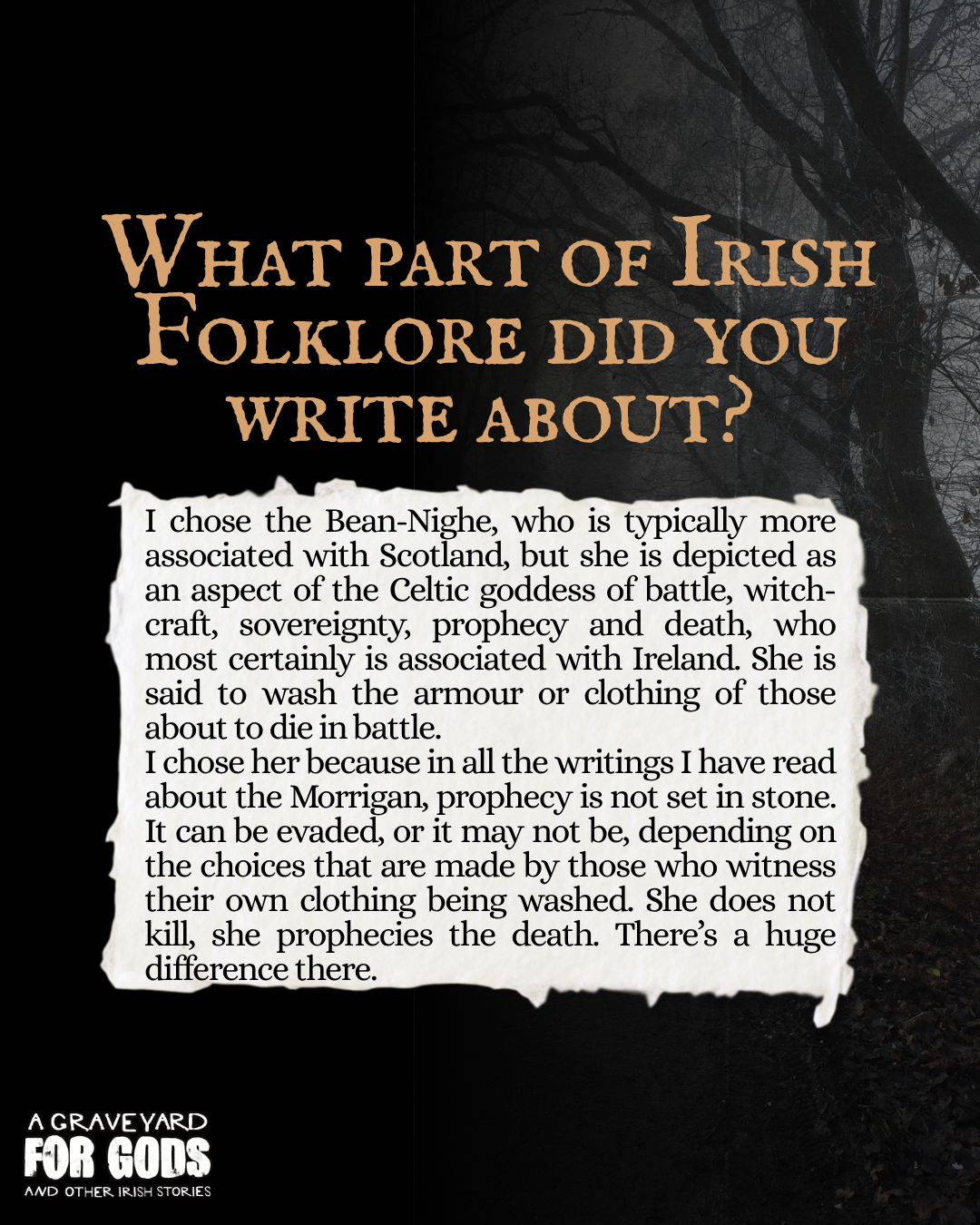
Answer: I thought about the fatalistic dark prophecies our brains conjure during serious mental health events, how they can be so certain about what will come to be and why there’s no use fighting what depression or anxiety tells us. I pondered on that a while before realising that all prophecy is that way. It depends on the choices we make. If the Bean- prophesied that a warrior would die in battle, maybe it’s because the battle tactics they had planned on using would lead to death. Perhaps a better approach is to try a different tactic. Death may occur despite their best attempts, but they went out fighting.
Most people don’t know what it’s like to march to an actual, physical battle. Nowadays, most of us battle with our own thoughts. I think mental health is a modern day war that a lot of readers can relate to and understand. The dread of knowing it can occur to anybody, whether it’s reactive depression or a chemical imbalance in the brain like we see in bipolar or schizophrenia, can be terrifying.
I decided to have the Bean-Nighe with her prophecies of fatalistic certainty cross paths with a young person struggling with their mental health, and to see how that played out.
What Sets Us Apart
People-First Approach
Everything we do is built around understanding your needs and helping you succeed—because when you thrive, so do we.
Long-Term Relationships
We’re not just here for the now. We love creating lasting relationships with our clients and growing with them over time.
Proven Process, Flexible Execution
We bring structure where it counts and adaptability where it matters. Our methods are clear, but always responsive.